
Have you ever had a gut feeling about something? Felt butterflies before a difficult conversation? Lost your appetite when you were anxious? These aren't just figures of speech. They're your gut and brain in direct communication — and science is only now beginning to understand how profound that conversation really is.
The gut-brain axis is one of the most exciting areas of current research in health and neuroscience. What it's revealing is simple but striking: your digestive system is not just processing food. It's actively shaping your mood, your stress response, your sleep, and even your thoughts.
"The gut is not a second brain — it's more like a first brain that learned to share the conversation."
— paraphrasing Michael Gershon, The Second Brain, 1998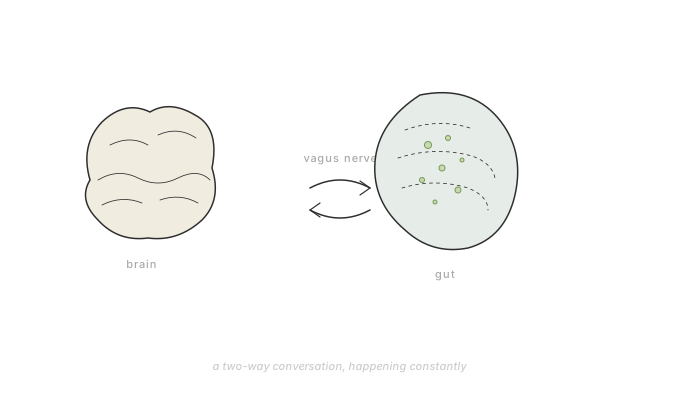
What is the gut-brain axis?
The gut-brain axis is the name researchers give to the network of connections between your digestive system and your central nervous system. It's not a single pathway — it's a complex, multi-directional communication system made up of nerves, hormones, immune signals and microorganisms.
At the centre of this system is the enteric nervous system — a vast network of over 500 million neurons lining your gut wall. This is sometimes called the "second brain," not because it thinks the way your brain does, but because it can operate independently, sense its environment and send signals without waiting for instructions from above.
The vagus nerve: the highway between gut and brain
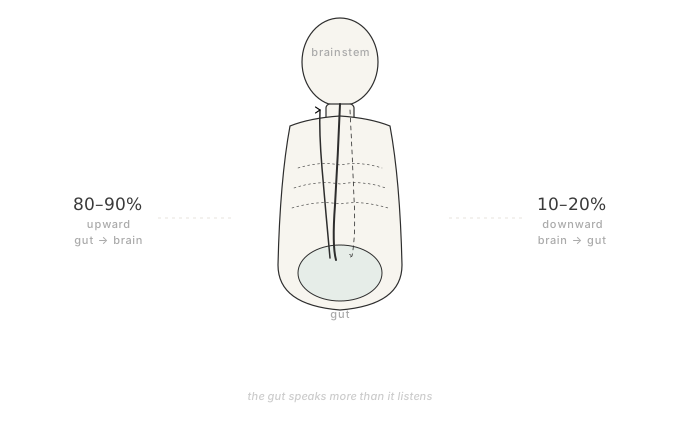
The main physical connection in this system is the vagus nerve — the longest nerve in the body, running from the brainstem all the way down through the neck, chest and into the abdomen. Think of it as a two-way motorway between your gut and your brain.
What's striking is the direction of traffic. Research shows that around 80–90% of the fibres in the vagus nerve carry information from the gut up to the brain — not the other way around. This means your gut is constantly reporting to your brain: on what you've eaten, on the state of your microbiome, on whether it feels safe or under threat. And your brain is listening.1
Serotonin, mood and the gut
Here's the fact that surprises almost everyone: around 90% of the body's serotonin is produced in the gut, not the brain. Serotonin is the neurotransmitter most commonly associated with mood, emotional stability and a general sense of well-being. We tend to think of it as a brain chemical — but the gut makes most of it.2
The gut also produces dopamine precursors, GABA — which has a calming effect on the nervous system — and dozens of other neuroactive compounds. The composition of your gut microbiome directly influences how much of these substances are produced. A diverse, well-nourished microbiome produces more. A depleted one — through poor diet, chronic stress or antibiotic use — produces less.3
What disrupts the gut-brain axis?
The relationship between gut and brain is sensitive. Several common factors in modern life are known to disrupt it — and recognising them is the first step toward doing something about it.
What you can actually do
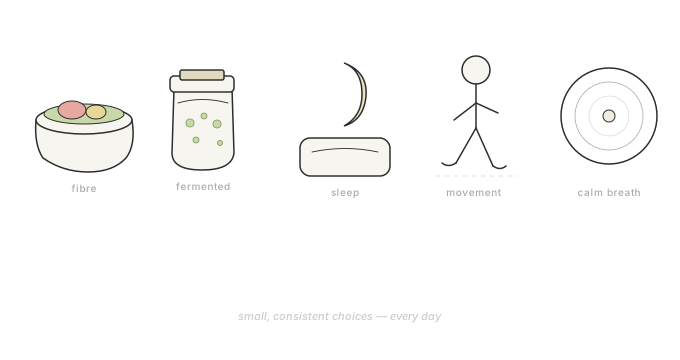
The good news is that the gut microbiome is remarkably responsive. It can begin to shift within days of changing your diet. It responds to stress reduction, sleep improvement, movement and fermented foods. You have more influence over it than you might think — and the effects show up not just in digestion, but in how you feel.4
- Eat more fibre. Gut bacteria feed on fibre — particularly from vegetables, legumes, whole grains, fruits and nuts. Aim for variety, not just quantity. Different fibre types feed different bacterial strains.
- Include fermented foods. Yoghurt, kefir, sauerkraut, kimchi, miso, tempeh — these contain live bacteria that can support microbial diversity. Even small amounts regularly make a difference.
- Reduce ultra-processed food. Not as a rule, but as a general direction. The emulsifiers, artificial sweeteners and additives in highly processed foods have been shown to negatively affect the microbiome.
- Support your vagus nerve. Slow, extended exhales — like the 4-second inhale, 6-second exhale pattern — directly stimulate the vagus nerve and help shift the nervous system toward calm. This improves gut-brain signalling.
- Prioritise sleep. The microbiome follows a circadian rhythm. Irregular sleep — especially sleeping at different times each night — disrupts microbial balance in ways that affect mood and cognition.
- Address chronic stress. Stress is one of the most powerful disruptors of gut health. Anything that genuinely reduces your stress response — movement, rest, nervous system regulation, social connection — also benefits your gut.
Why this matters beyond digestion
Research into the gut-brain axis is reshaping how we understand mental health conditions. Studies have found distinct differences in the gut microbiomes of people with depression, anxiety and even neurodevelopmental conditions like autism — suggesting that gut health is not just a downstream effect of mental health, but an upstream influence on it.5
This doesn't mean we should replace psychological care with probiotics. But it does mean that caring for your gut — through food, sleep, stress and lifestyle — is a legitimate part of caring for your mental health. Not separate from it.
Related article
How what you eat shapes how you feel